The safest way to move heavy furniture is to plan the route, measure tight spaces, protect the home, and use the right tools. To move heavy furniture safely, keep the load balanced and stop when stairs, weight, poor access, or weak footing creates a risk that you cannot control.
Lake Charles homeowners can handle simple preparation before a move. Clear the route, protect floors and walls, and measure each tight space before lifting.
How do you prepare to move heavy furniture?
Start by planning the full route. Measure the furniture, doors, halls, stairs, landings, and turns before lifting anything. Record the height, width, and depth. Also measure the diagonal if the item may need to stand on end or turn sideways.
Do not trust the size listed for a doorway. Trim, hinges, handles, baseboards, and door stops can reduce the open space. Measure the narrowest clear area. A couch may pass the door but fail at the next turn. A tall dresser may clear the stairs but hit a low ceiling.
Lake Charles homes may have tight halls, stair landings, or outdoor routes that need extra planning. Check the full path before choosing how to move the item.
Measure the furniture, doors, halls, and stairs
Open each door as far as it can safely open. Check the route from the current room to the truck, storage space, or new room. Look for lights, shelves, pictures, sprinklers, porch rails, and low branches outside. These objects can cause trouble during a turn.
Take photos of tight areas before moving. Mark the direction the item should face at each turn. This gives everyone a simple plan. It also helps Lake Charles Movers understand the access problem if a homeowner needs advice.
Clear and protect the moving path
Remove rugs, toys, plants, small tables, and loose cords. Keep pets and children in another room. Unlock doors and hold them open when safe. Keep the route clear from the first lift until the item is placed.
Cover floors before moving starts. Use clean moving blankets, floor runners, or firm boards that suit the surface. Pad wall corners and door trim. Protection keeps both the furniture and the home safer. It also gives movers more space to work.
What equipment do you need to move heavy furniture?
The right equipment can reduce strain and give better control. A two-wheel appliance dolly works well for tall, steady items. A four-wheel furniture dolly supports broad, low pieces. Furniture sliders help move an item across a smooth floor after the weight is placed on them.
A lifting strap can help a trained team share a load. It does not make an unsafe item safe. Place straps as directed and check them during the move. A slipping strap can cause a sudden drop or twist.
Choose the right dolly, sliders, straps, and lifting tools
Use wheels made for the ground beneath them. Small wheels may work indoors but struggle over thresholds. Larger wheels handle small gaps better. A stair-climbing dolly is not the same as a basic dolly. Only use one if the people handling it know how to control it.
Keep the heaviest part low and close to the dolly. Secure tall furniture so it cannot tip. Never strap a cracked or loose section as a lifting point. For very heavy objects, professional loading help may be safer than tools used without a plan.
Use blankets, corner guards, and other padding
Wrap finished surfaces with clean blankets. Add guards to sharp corners. Use stretch wrap only after padding is in place. Plastic wrap against bare wood can trap moisture or rub grit into the finish.
Do not tape directly to painted walls, wood, leather, or delicate finishes. Put painter’s tape on the protective material instead. Keep screws and hardware in a labeled bag. Missing parts can delay setup and leave furniture unsafe.
How can you move heavy furniture by yourself?
A person may move some small or medium items alone. Heavy furniture often needs at least two people. The safe choice depends on weight, shape, balance, distance, stairs, and strength. If the item blocks your view or cannot be stopped quickly, do not move it alone.
Do not begin a lift just to test your strength. First remove drawers, shelves, cushions, and loose parts. Tilt the item only enough to place sliders or a dolly below it. Keep your hands away from pinch points.
Know which tasks are unsafe to handle alone
Large couches, loaded bookcases, stone tops, gun safes, pianos, large fish tanks, and tall appliances can shift without warning. Glass panels and aquariums need special care. Remove water, gravel, decorations, and equipment from a fish tank before moving it. An empty tank can still break.
Never move a heavy item alone on stairs. The risk is higher when the item is tall, top-heavy, slippery, or too wide to hold close. Back pain, poor balance, a recent injury, or a weak grip are also reasons to stop.
Use leverage and slow movement instead of lifting
Keep your back in a neutral position. Bend through your hips and knees. Push rather than pull when the route allows it. Move a short distance at a time. Pause after each turn to check the load, hands, path, and floor.
Do not jerk, twist, or lift with a rounded back. Never put a foot under furniture to move it. Use a pry bar only with proper protection and skill. If the item must be lifted above waist height, let a second person or trained movers take over.
How do you move heavy furniture upstairs or downstairs?
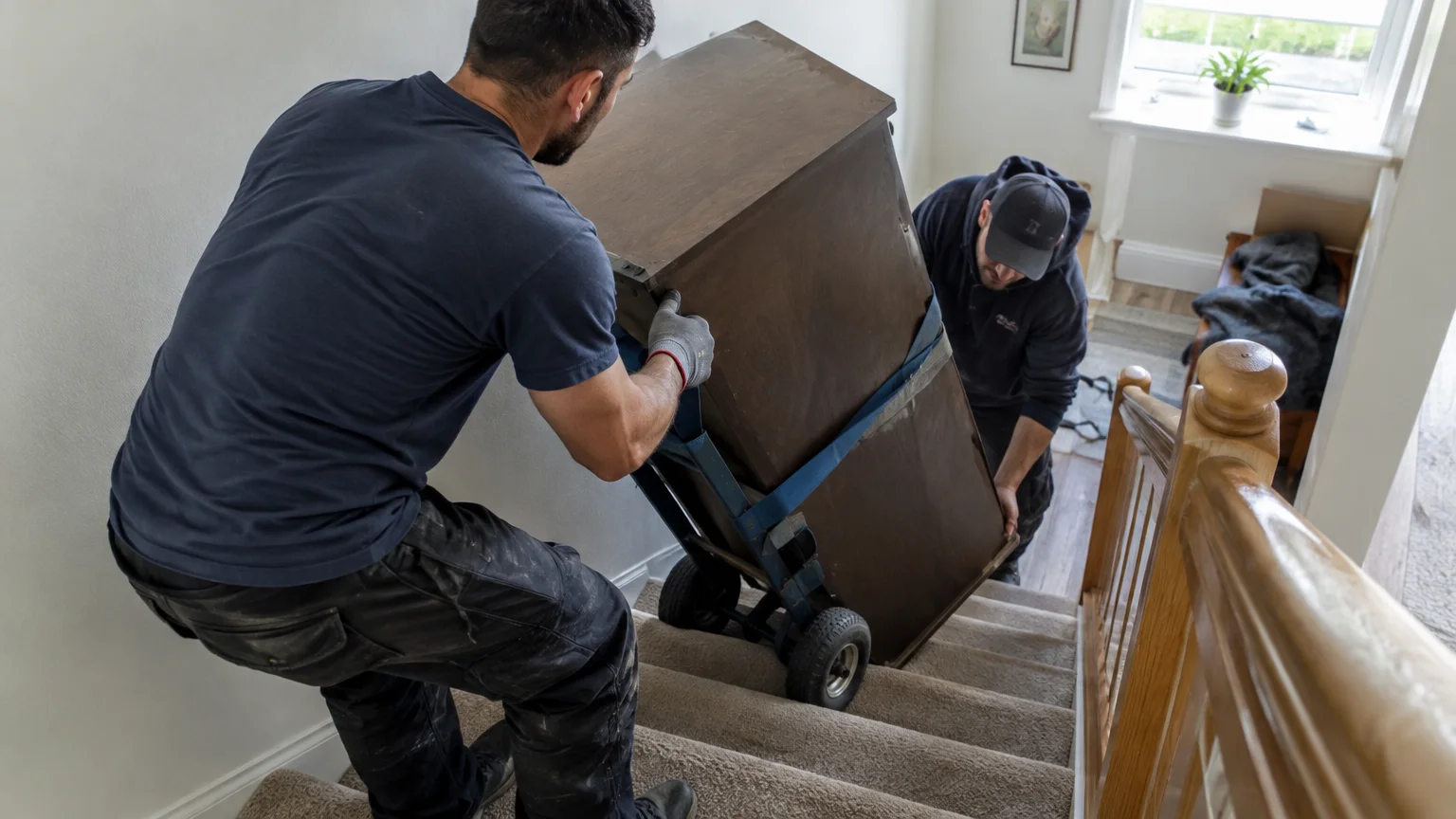
Stairs need a written plan before the item reaches the first step. Decide who leads, who follows, where each person stands, and which words mean stop. Everyone must hear the commands. One person should direct the move so instructions do not conflict.
Check every step for loose boards, slippery areas, narrow edges, and weak rails. Clear both landings. Pad walls and rails, but do not cover steps in a way that creates a trip hazard.
Plan stair movements and assign positions
Keep the item balanced and close to the stair line. The strongest person is not always the best leader. The person with the clearest view and best footing should help direct the move. Use slow movements and stop before anyone loses grip.
A dolly can roll or tip on stairs if the load is not secure. Do not pull a heavy item from above while someone pushes without seeing the path below. If the item cannot stay controlled at every step, return it to a safe landing and change the plan.
Protect stairs, rails, walls, and floors
Use moving blankets on open walls and rails. Protect stair treads with material that will not slide. Watch the bottom of the furniture as it moves. A lower edge can scrape trim even when the top looks clear.
Keep fingers away from gaps between the item and wall. Do not use a rail as a lifting handle unless it is made for that job. Steep stairs, sharp landings, or no safe resting place are good reasons to use trained help.
How do you get large furniture through a narrow doorway?
Large furniture often passes a narrow doorway by changing its angle. Do not force it straight through. Compare the item’s size with the doorway, then plan the turn. The widest point may need to pass first while the piece is tilted or turned.
Open the door fully. Remove it from its hinges only if the door and hinges can be handled safely. Protect the door and keep its pins and screws together. Never force the frame to gain a little space.
Find the best angle and rotation path
A couch often enters on its side with the back angled toward the ceiling. One end passes through first, followed by a slow pivot. Keep legs and corners away from the frame. A spotter should watch the top and far side.
For a table or dresser, check whether it can stand on end without damage. Check ceiling height before turning it. A piece may fit the doorway but hit a light, ceiling, or opposite wall during the turn.
Remove doors, legs, drawers, and other safe parts
Remove legs, shelves, drawers, handles, and doors when the design allows it. Mark each part so it returns to the right place. Keep screws in labeled bags. Do not mix hardware from different pieces.
Do not remove structural panels without maker instructions or skilled help. A weak frame can twist or break. If the item has glued joints, glass, stone, or a delicate finish, careful disassembly may be safer than repeated attempts.
How do you move a couch, bed, dresser, or table?
Each type of furniture needs a different grip and balance point. The safest method keeps the weight supported and the route visible. Empty every drawer, shelf, cabinet, and storage area first. Loose contents can shift and make the item unstable.
A second person should watch corners and give clear directions. Do not carry furniture by a handle, drawer front, thin trim, or removable arm unless it was made for lifting. Hold strong frame sections instead.
How do you move a couch or bed?
Remove couch cushions and set them aside. Check whether the legs come off. Turn the couch only after checking the doorway, ceiling, and wall space. Keep the padded side away from dirty floors and sharp edges.
Take a bed frame apart when possible. Keep rails, slats, bolts, and brackets together. A mattress is flexible but awkward. Carry it upright with two people. Do not bend it sharply if the maker warns against folding it.
How do you move a dresser or table?
Empty a dresser fully and remove its drawers. Drawers can slide open and make the load harder to control. Keep the dresser upright unless its design allows another position.
Remove table legs when possible. Protect glass tops, stone tops, and leaves separately. Carry tops on edge with full support, not flat by one corner. Large tables can catch wind outdoors, so keep them close to the ground.
How do you move heavy furniture without damaging floors or walls?
Damage often happens during starts, stops, corners, and threshold crossings. Move slowly and keep the load supported. Dragging heavy furniture can scratch floors, crush carpet fibers, or leave marks that appear later.
Use sliders made for the floor surface. Clean grit from the route first. A small stone under a slider can scratch hardwood. Lift the item enough to place each slider correctly, then test it with gentle pressure.
Prevent scratches, dents, and floor pressure
Use floor runners on long routes. Add firm protection where wheels cross thresholds or soft flooring. Do not roll a loaded dolly over a loose rug. Keep wheel tracks straight and avoid sharp turns on delicate floors.
Protect corners with blankets or foam. Check that the padding stays in place. Do not rely on cardboard alone around sharp corners. Cardboard can fold, slide, or transfer pressure to a wall.
Control corners, thresholds, and tight turns
Approach thresholds straight when possible. Lift the front wheels over a small edge while another person steadies the load. Never ram a dolly into a threshold. The shock can damage wheels, flooring, joints, or hands.
At a corner, stop before turning. Decide which end moves first and where the outside corner will travel. Keep the item away from walls instead of fixing a bad angle after contact starts.
What should you do when heavy furniture will not fit?
Stop and measure again when furniture will not fit. Do not push harder or add more people. Compare the smallest position of the furniture with the narrowest clear space. Check trim, hinges, handles, baseboards, and the full turning area.
A failed attempt can damage furniture and the building. It can also wedge the item in place. Take photos and mark the problem area. A new view often shows a missed measurement or blocked turn.
Recheck measurements and removable parts
Remove cushions, drawers, shelves, legs, doors, and handles where safe. Look for maker instructions before taking apart joints or panels. Measure again after each part comes off. A small change may solve the problem, but it must not weaken the piece.
Check other routes through another room, a wider door, a garage, or a patio. An alternate route still needs a safe surface, enough space, and weather protection. Do not use a window, balcony, or roof without a trained plan and proper equipment.
Decide when disassembly, another route, or help is needed
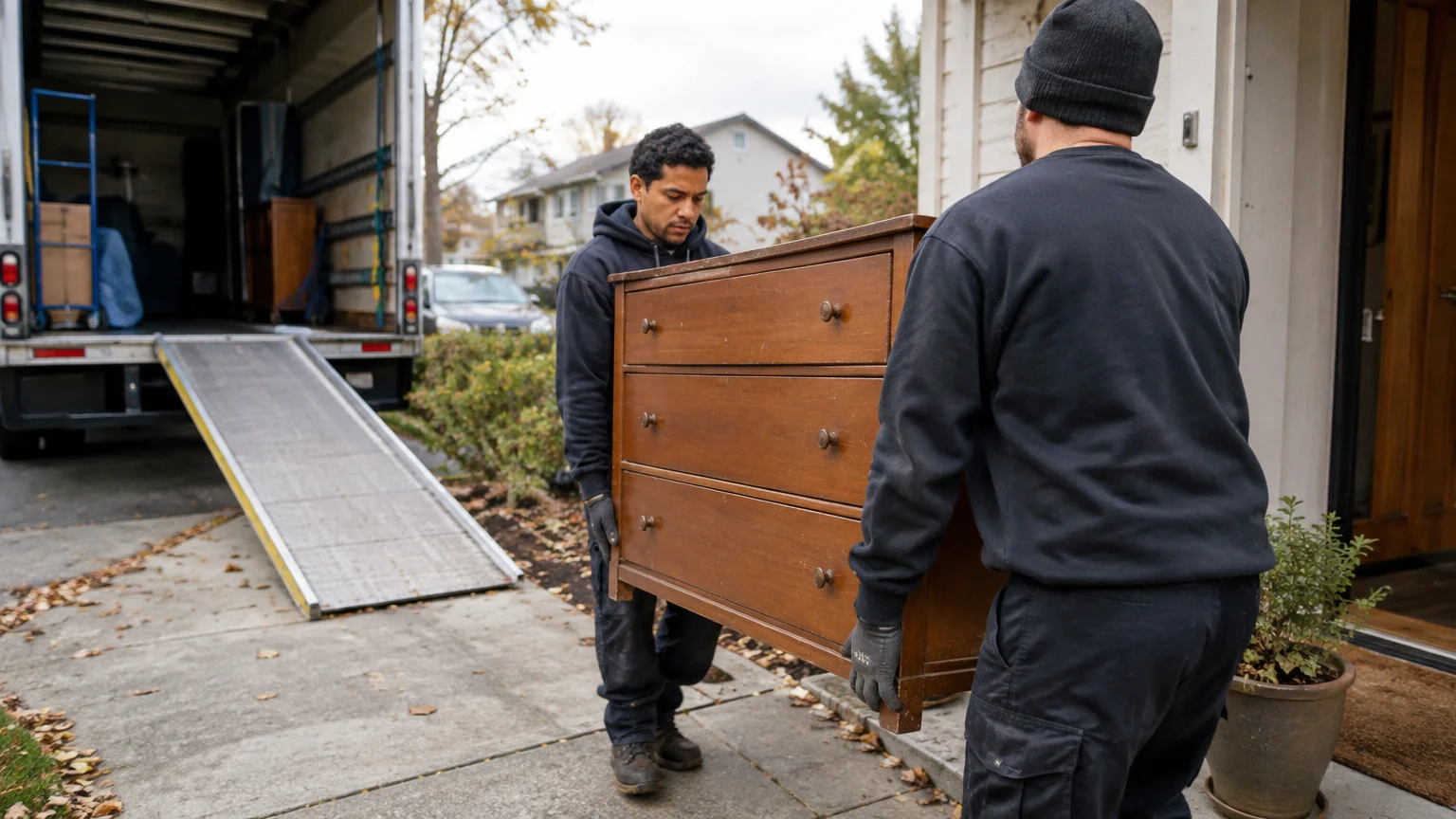
Disassembly helps when furniture is designed for it. It may not help when the item has glued joints, fragile finishes, heavy stone, or complex wiring. If reassembly could affect safety, use skilled help.
Professional movers can inspect the route and choose tools that suit the item. Lake Charles Movers can help homeowners and business owners decide whether disassembly, another route, or trained moving labor is the safer choice.
When should you hire professional movers for heavy furniture?
Professional movers make sense when an item is too heavy, large, fragile, or risky for the available team. Stairs, long carries, tight turns, narrow doors, and poor footing all add risk. An injury or damaged home can cost much more than the time saved by trying again.
A team can also help when someone needs loading or unloading support instead of a full move. Loading & Unloading Help may suit a person using a truck, pod, or container. Furniture Movers may suit a bulky item that needs careful lifting, padding, and transport.
Recognize injury, damage, and access risks
Stop when anyone feels pain, loses grip, cannot see the route, or cannot follow the plan. Stop when the item leans, the dolly shifts, or floor protection moves. A near miss does not prove that another attempt is safe.
Professional help is also wise for furniture with glass, stone, artwork, electronics, water, or unusual balance. Office furniture may need a different plan from household furniture. Commercial & Office Movers can help limit delays when large work items move through a busy building.
Understand what affects a moving quote
A moving estimate depends on the item, route, access, protection needs, labor, tools, and transport plan. One light item on a clear ground-floor path is simpler than a heavy item on stairs with a narrow turn. The final cost is confirmed on a quote after the mover understands the job.
Share measurements, photos, floor levels, doorway sizes, parking limits, and known hazards. Clear details help the team plan well. They also help you compare moving companies based on safety and fit.
What are the key takeaways for moving heavy furniture safely?
The safest move starts before anyone lifts. Measure the furniture and the full route. Remove loose parts, protect the path, and choose tools that match the weight and floor. Keep each movement slow and controlled.
A homeowner can safely handle checks, cleaning, emptying drawers, and simple preparation. Heavy lifting, stairs, fragile items, tight access, and awkward turns may need trained help. Stop as soon as control is lost.
Use a planning and safety checklist
- Measure the furniture, doors, halls, stairs, ceilings, and turns.
- Empty drawers, cabinets, shelves, tanks, and storage areas.
- Remove safe-to-remove legs, doors, shelves, cushions, and handles.
- Clear the route and protect floors, walls, trim, and railings.
- Choose a dolly, sliders, straps, blankets, and padding for the task.
- Set clear commands before lifting, turning, or using stairs.
- Keep hardware labeled and protect every finished surface.
Know when to stop and get help
Stop if the furniture will not fit, cannot stay balanced, or blocks the team’s view. Stop if the floor, stairs, weather, or parking area creates a new hazard. Stop if anyone feels pain or cannot hold the item safely.
For planned or urgent moving needs, Lake Charles Movers can discuss a safer way to handle heavy furniture. Contact us to request a quote based on the item’s size, route, access, and protection needs.
Frequently Asked Questions
Can one person move heavy furniture safely?
One person may move a small, stable item across a clear, level floor with proper sliders. Large, tall, fragile, or heavy furniture usually needs another person. Stairs, tight turns, and poor footing raise the risk. If the item cannot be stopped or controlled alone, wait for help.
How do you move a couch through a door?
Remove the cushions and legs first when possible. Stand the couch on its side, angle the back toward the ceiling, and rotate it through the opening slowly. Measure the doorway and turning space before starting. A second person should watch the top, corners, and far side.
How do you move a heavy item upstairs?
Plan the stair route before lifting. Clear every landing, protect walls and steps, assign positions, and use simple stop commands. Keep the item balanced and move one step at a time. A heavy or unstable item should not go upstairs without trained help and suitable equipment.
How do you move a fish tank?
Move the fish into a suitable covered container with tank water, a stable temperature, and enough air before draining the tank. Keep filter media wet in tank water. Remove gravel, decorations, lids, and equipment without deep-cleaning everything. Even an empty glass tank can crack if lifted by its frame or placed on an uneven surface. Support the bottom across its full base and protect the glass.
What should someone do when furniture will not fit?
Stop pushing and measure the narrowest part of the route again. Check whether doors, legs, drawers, shelves, or handles can be removed safely. Look for another route. If the item is fragile, heavy, wedged, or hard to take apart, have professional movers assess the safest next step.
When you are unsure, pause before the problem becomes larger. Lake Charles Movers can review the access and help you choose a safe plan.
If you are not sure what you are dealing with, it is worth having someone look at it before it turns into a bigger job. Get in touch with Lake Charles Movers today and we will tell you where you stand.